


 русский
 Français
 Español
 Indonesia
 عربى
عربى



You can hear the television from two rooms away, or a phone call in the next office carries through the wall like there is nothing between the two spaces. That kind of noise leakage is one of the more common complaints tied to a Veneer Interior Door made with a hollow core, and it is exactly the kind of frustration that pushes homeowners, hoteliers, and office managers to start looking at solid core alternatives instead. Privacy is not just about sight lines, after all. It is about sound staying where it belongs. For buyers sourcing interior doors at scale, whether for a housing development, a hospitality property, or an office fit out, understanding why a solid core veneer construction handles this problem differently than a hollow panel matters before any purchase order goes out.
Why Do Hollow Core Doors Struggle With Sound?
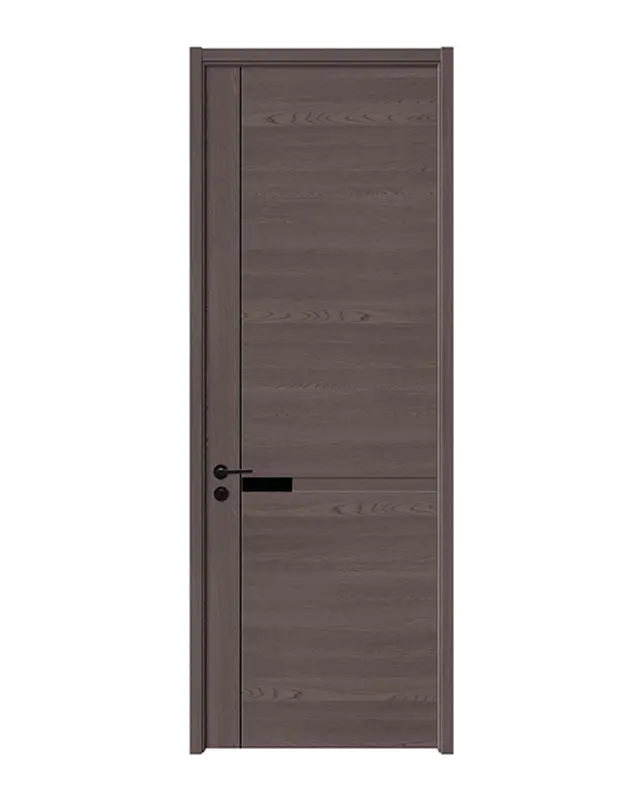
A hollow core door is basically a thin wooden shell wrapped around a cardboard honeycomb or a mostly empty cavity. There is not much mass there, and sound waves travel through light, empty materials with far less resistance than they do through something dense. Knock on one and you get a hollow, papery echo. That same lack of mass is what lets conversations, television audio, and footsteps pass through so easily.
Solid core construction flips that equation. The internal structure is filled with a dense material, often particleboard or engineered wood composite, which gives sound waves something substantial to push against. That added mass is the whole reason this door type gets specified in spaces where privacy is not optional, like bedrooms, hotel guest rooms, and private offices.
What Role Does the Veneer Layer Play?
The veneer itself is a thin decorative wood layer applied over the solid core, giving the door a natural wood grain appearance without needing to be built from solid timber all the way through. It does not add much to the sound blocking performance on its own, but it does something equally important for buyers: it lets a dense, practical door look like a refined wood product rather than a plain slab, which matters a great deal in residential and hospitality settings where appearance carries weight alongside function.
Comparing Interior Door Materials Side By Side
Buyers weighing their options often want a straightforward comparison before committing to a material. Here is how the common categories stack up against each other.
| Door Type | Sound Blocking | Weight | Typical Use | Cost Tier |
|---|---|---|---|---|
| Hollow Core | Limited | Light | Closets, low-traffic rooms | Lower |
| Solid Core Veneer | Strong; noticeable improvement | Moderate to heavy | Bedrooms, offices, hotel rooms | Mid-range |
| Solid Wood | Strong; comparable to veneer core | Heavy | High-end residential, statement doors | Higher |
| Engineered Composite | Varies by fill density | Moderate | Commercial corridors, multi-unit housing | Mid-range |
Looking at this table, the pattern that stands out is how solid core veneer doors sit in a comfortable middle position. They deliver sound and privacy performance close to solid wood without carrying the same weight or cost, which explains why so many mid market residential and commercial projects specify them by default.
How Does This Play Out in Real Settings?
Picture a hotel corridor where guest rooms sit side by side. A hollow core door there would mean every late night conversation, every suitcase dragged across the floor, becomes background noise for the neighboring room. Swap in a solid core veneer option and that noise drops enough that guests stop noticing the room next door exists. Hotel operators care about this because guest reviews mention noise complaints often enough to affect repeat bookings.
Office settings tell a similar story. A private office or a small meeting room needs enough acoustic separation that sensitive conversations do not spill into open work areas. A door built with a hollow shell undermines that privacy no matter how well the walls are insulated, since sound finds the weakest point in the barrier and a light door is almost always that weak point.
Does Privacy Extend Beyond Just Sound?
Sound is the obvious concern, but visual privacy matters too, particularly in bathrooms, bedrooms, and private offices where light gaps or thin panels create discomfort even without any noise involved. A denser door construction tends to fit more snugly within its frame, reducing light leakage around the edges and giving occupants a stronger sense that the space is genuinely closed off.
What Should Buyers Look For When Sourcing These Doors?
Not every product labeled solid core performs the same way, and this is where sourcing decisions get more detailed. A few practical points worth checking before placing an order:
- Core density and fill material, since some manufacturers use lighter fill that reduces both weight and sound performance.
- Veneer thickness and finish quality, which affects how the door holds up to wear and how consistent the grain pattern looks across a batch.
- Frame and hardware compatibility, particularly for bulk orders going into standardized construction projects.
- Moisture resistance, especially for units heading into bathrooms or humid climates where warping becomes a real concern over time.
Skipping these checks tends to surface problems later, usually after installation, when swapping out doors becomes far more expensive than catching the issue during procurement.
Is Interior Door Material Comparison Worth Doing Before Every Project?
It sounds like an obvious step, yet plenty of buyers skip it and default to whatever they used on a previous project. That approach works fine until the application changes, say from a low traffic storage room to a guest facing hotel corridor, and suddenly the old material choice falls short. Running a quick material comparison against the specific noise and privacy requirements of a project avoids that kind of mismatch and tends to save money over the life of the building.
Choosing the Right Fit for Different Project Types
Residential developers, hospitality groups, and office fit out contractors do not always weigh the same factors equally. A developer building rental housing might prioritize cost alongside performance, while a boutique hotel might lean harder toward finish quality since guest perception matters more there. Office contractors often split the difference, needing enough acoustic performance for meeting rooms while keeping general corridor doors more budget conscious.
None of this means one door type fits every application within a single project. It is common, and reasonable, to specify solid core veneer doors for private and guest facing spaces while using lighter options for closets, storage, or low traffic utility rooms.
Bringing the Decision Together
Noise complaints and privacy frustrations rarely disappear on their own, and swapping in a heavier, denser door tends to solve both problems at once without requiring structural changes to the walls around it. A Veneer Interior Door built on a solid core gives buyers a practical middle ground between the plain, sound leaking hollow options and the higher cost of full solid wood construction, all while keeping a finished appearance that fits residential, hospitality, and office environments alike. Buyers working through an Interior Door Wholesale Supplier relationship generally find that clarifying core density, veneer finish, and moisture resistance upfront leads to fewer surprises once doors arrive on site. Zhejiang Haibo Door Co., Ltd. works with project teams sourcing interior doors across these different settings, and sharing your room type, volume, and finish preferences is a practical way to start narrowing down the right specification for your build.
 Previous


