
+86-15268065988
Home / Blogs / Industry News / How Do Glass Interior Doors Compare by Material?

How Do Glass Interior Doors Compare by Material?

Specifying interior doors for a renovation or a new build forces a tradeoff that catalogs rarely spell out clearly: the design statement a client wants does not always align with what a given room actually needs to function well. Glass interior doors have pushed their way from a niche architectural choice into something close to a default option in certain project types, mostly because they solve that tension better than a flat panel ever could — sightlines open up, light moves through a floor plan instead of stopping dead at every threshold. None of that makes glass the right call everywhere, though. Buyers weighing materials for residential or commercial work need a sharper sense of where glass actually earns its place against veneer and MDF, and where the choice of Interior Door Wholesale Supplier changes the math entirely.
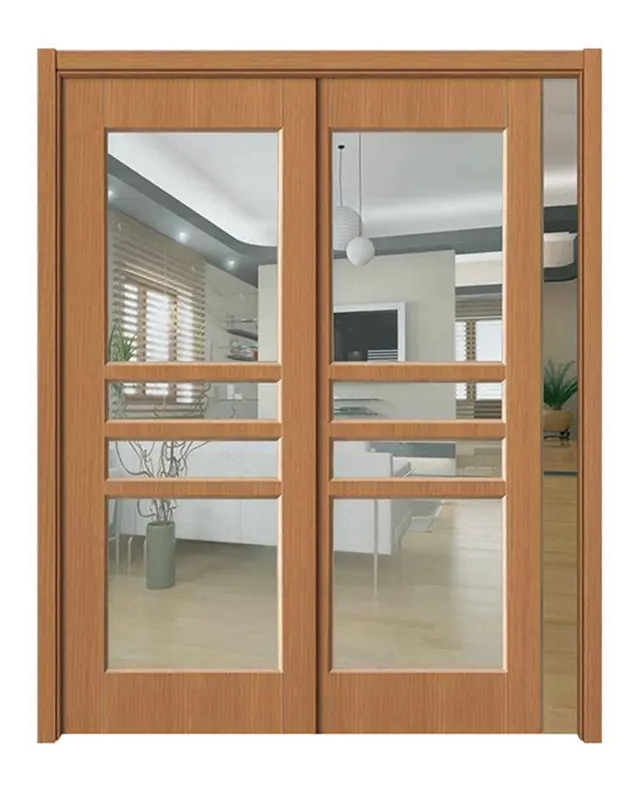
Veneer Interior Door combines elegant design and reliable structure for modern building projects.

Why Glass Interior Doors Are Becoming a Modern Design Trend

OPEN
The Shift Toward Visual Openness

Minimalism dominates a lot of current interior design thinking, and glass slots into that aesthetic without much friction. A glass door between a living room and a home office benefits smaller apartments in a straightforward way—it keeps the smaller space from feeling sealed off, boxed in by another solid panel that breaks up the floor plan.

LIGHT
Natural Light as a Design Resource

Daylight stops at a doorway when the door is solid. It does not when the door is glass. Interior rooms with no exterior wall — a study tucked behind a hallway, a powder room in a commercial fit-out — pick up borrowed light through an adjacent glazed door, and that is a functional win wearing an aesthetic costume. Architects keep specifying glass for this reason well outside purely residential work.

COMM
Commercial Adoption Beyond Residential Projects

Offices, boutique retail, hospitality interiors — all three have leaned into the same logic for different reasons. A glass partition signals something about brand identity while quietly solving a layout problem: keeping a floor plan feeling open even where some physical separation between zones is still required. It is finish and function operating at the same time, not one dressed up as the other.

Interior Door Material Comparison: Glass vs Veneer vs MDF

Past the surface-level aesthetic differences, what actually separates these three materials is how each behaves once it is installed and living through years of daily contact.

Glass Interior Doors

Light transmission paired with a clean surface is the defining trait here. Framed in slim aluminum or timber edging, a glass door creates visual continuity between adjoining rooms in a way no opaque material can replicate. Privacy is the obvious cost — frosted, textured, or partially opaque treatments exist specifically to manage this limitation, though full transparency remains the default unless someone specifies otherwise. Durability lands in a reasonable middle tier. Tempered glass shrugs off ordinary daily contact well enough, but structurally it is simply a different proposition than a solid wood panel, and buyers should treat it as such rather than assuming equivalence.

Veneer Interior Doors

A Veneer Interior Door takes an engineered core and wraps it in a thin slice of real wood, landing somewhere between the cost of MDF and the price of solid timber while keeping the tactile warmth people associate with genuine wood. This remains a workhorse choice in residential projects precisely because it threads that needle between appearance and budget without forcing a compromise on either side. Wear resistance tends to outperform glass for ordinary daily use, and the surface tolerates the kind of contact a bedroom or hallway door takes on without much trouble.

MDF Interior Doors

Engineered cores machine cleanly, and MDF takes paint or laminate finishes without the fuss that some other substrates demand. Cost is the headline benefit — MDF generally undercuts both veneer and glass at volume, and its dimensional stability makes it forgiving during installation, which matters more than people expect when a crew is hanging dozens of doors against a tight schedule. The compromise is a less premium feel next to genuine wood veneer, though a properly finished MDF door under a quality paint system holds up visually just fine in plenty of contexts.

Glass Interior Doors vs Traditional Door Materials: Key Differences

Feature Glass Door Veneer Door MDF Door
Visual Style Contemporary, transparent Classic, warm wood tone Clean, paintable surface
Privacy Level Low unless treated Moderate to full Full
Durability for Daily Use Moderate Generally strong Moderate to strong
Light Transmission High Minimal Minimal
Customization Range Frame style, glass treatment Wood species, stain finish Paint color, surface texture
Typical Cost Position Mid to higher Mid-range Lower to mid-range

When Glass Interior Doors Make Sense

Modern Apartments and Open Layouts

Compact urban units gain appreciably from glass, which maintains unbroken sightlines across a tight footprint. A glazed door separating a living area from a home office maintains the boundary without making either side feel cut off — which matters considerably more in five hundred square feet than it does in a sprawling suburban floor plan.

Office Partitions and Workspace Design

Transparency in commercial interiors does double work, signaling something about brand identity while keeping sightlines open across a floor plan. Meeting rooms and shared workspaces lean on glass partitions specifically because they preserve visual connection between zones that still need to be functionally distinct.

Luxury Interior Projects

High-end residential and hospitality work tends to specify glass as one piece of a broader premium material palette. The cost premium that glass sometimes carries fits naturally into a budget already weighted toward higher-end finishes throughout the rest of the project, so it rarely stands out as an unusual line item.

Spaces Prioritizing Daylight Over Privacy

Wherever the design brief favors light over enclosure, glass is a reasonable candidate. Interior corridors, stairwells with adjoining rooms, transitional spaces — these are places where full privacy was never really part of the functional requirement to begin with.

When Veneer or MDF Doors Are Better Alternatives

Privacy-Focused Rooms

Bedrooms, bathrooms, private offices — these call for materials that block sightlines completely, full stop. Veneer and MDF handle this without the added cost or design complexity that frosted or treated glass introduces.

Budget-Constrained Projects

Large residential developments and rental property portfolios working against tighter material budgets default to MDF often enough that it has become something of an industry standard for volume builds. Multiply the savings per unit across dozens or hundreds of doors and the gap against full glass specification becomes substantial rather than marginal.

Traditional or Classic Styles

Period-style homes and classic hospitality interiors tend to favor the warmth of wood veneer over the contemporary edge glass brings to a space. Glass can look genuinely out of place against more ornate or heritage architecture — not wrong exactly, just visually dissonant with everything else in the room.

How to Choose an Interior Door Wholesale Supplier

Manufacturing Capability

Production capacity becomes relevant the moment a project moves past a handful of units. Confirming factory scale and a supplier's ability to sustain consistent output for a large order is a sensible early check—before moving on to finer details that hold less weight when basic capacity is not in place.

Range of Material Options

Projects almost never specify a single door material from start to finish. A supplier handling glass, veneer, and MDF under one relationship simplifies procurement considerably against the alternative of juggling separate vendors for each material category, and it tends to smooth out logistics and quality coordination on mixed-material jobs.

Quality & Finishing

Surface finish, edge sealing, dimensional accuracy — all of it affects how a door performs after it is hung and living in a real space. Asking about a supplier's actual quality control process, rather than just admiring finished product photography, tells a more honest story about what an entire production run will look like, not just the sample that arrived first.

Export Experience

Suppliers with genuine export history tend to handle shipping logistics, documentation, and packaging with fewer surprises than factories that mostly serve domestic buyers. For anyone managing a project timeline across borders, that experience cuts down on delays that have nothing to do with the door itself and everything to do with paperwork nobody thought to ask about.

Why China Interior Door Factories Are Widely Used

Sourcing from China has become close to a default path for international buyers in this category, and the reasoning extends past a simple cost comparison. There, the supply chains for glass, veneer, and engineered wood components are dense and mature, giving factories the flexibility to source materials and avoid the waiting periods that thinner networks elsewhere often cause.

Customization is the other half of the story. Plenty of China Interior Door manufacturers are built to absorb project-specific requirements — odd sizes, particular glass treatments, custom veneer finishes — without the kind of production friction that smaller or less flexible operations run into. Paired with production scale that handles both modest trial orders and larger volume commitments without much strain, that flexibility explains why the sourcing relationship tends to work across project types, from a boutique residential build to a large commercial development.

OEM Support

Buyers building a private label door line, or needing a factory's cooperation on some specific architectural detail, generally run into more willingness to collaborate from manufacturers already structured around export business and project-based work rather than standard catalog sales.

Questions Buyers Commonly Ask

Q1
Are glass interior doors durable enough for regular use?

Tempered glass in interior door applications handles ordinary daily contact reasonably well and resists the kind of impact that would damage untreated glass. The durability profile differs from solid timber, but within its intended use case it holds up adequately for both residential and commercial daily traffic.

Q2
What is the difference between veneer and MDF doors?

Veneer doors wrap an engineered core in a thin layer of real wood, giving them an authentic grain and tactile quality. MDF doors skip that wood layer entirely, finished instead with paint or laminate over a fully engineered core — generally more cost-efficient, though visually distinct from genuine wood grain up close.

Q3
Are glass doors suitable for bedrooms?

Fully transparent glass is a poor fit for bedrooms, for reasons that need no explanation. Frosted, textured, or partially opaque treatments solve the privacy problem while keeping some of the light transmission benefit intact, which makes treated glass workable wherever the design brief still wants a glass aesthetic without sacrificing privacy entirely.

Q4
Which interior door material suits modern home design?

Glass directly aligns with contemporary, minimalist design language through its transparency and clean lines. That said, veneer and MDF doors finished with current hardware and color trends can read as just as modern depending on everything else happening in the room — material choice is one input among several, not the whole equation.

Q5
How should buyers evaluate an interior door supplier?

Production capacity, material range, finishing quality, and export experience are the areas worth confirming before locking in a sourcing relationship. Requesting samples and asking pointed questions about quality control tends to surface more useful information than scrolling through a catalog ever will.

Q6
Why does sourcing from China often reduce interior door costs?

Established material supply chains, manufacturing scale, and competitive production costs all factor into more accessible pricing, when the buyer selects a supplier with genuine quality discipline rather than opting for a low quote without scrutiny.

Q7
Can glass and veneer doors be sourced from the same supplier?

Many established manufacturers run multiple material categories under one production operation, which lets buyers source glass, veneer, and MDF doors through a single relationship instead of coordinating separate vendors for each material type.

Choosing between glass, veneer, and MDF interior doors rarely resolves into one correct answer across an entire project. Most buildings end up running a mix — glass where openness and light genuinely add value, veneer or MDF wherever privacy and budget take priority instead. What matters more than settling on a single material upfront is understanding how each one actually performs against the specific demands of a given space, then finding a supplier capable of delivering consistent quality across whatever combination the project ultimately calls for.

About the Manufacturer

Zhejiang Haibo Door Co., Ltd. manufactures interior doors spanning glass, veneer, and MDF categories, supporting residential and commercial projects with customization options and export experience suited to international sourcing needs. Sharing project scope, material preferences, and order volume is a practical way to start narrowing down the right mix of door types and confirming supply terms before committing to a full order.

Product Consultation