


 русский
 Français
 Español
 Indonesia
 عربى
عربى



Specifying doors for bathrooms and wet areas is one of those decisions that looks straightforward until a project comes back with warped frames, peeling surfaces, and adhesive failure six months after installation. The material that performed well in a hallway or bedroom behaves very differently when humidity is sustained and condensation accumulates on surfaces daily. A Veneer Interior Door selected without a clear understanding of its moisture thresholds is a liability — not an immediate one, but a slow-developing problem that creates warranty claims, rework costs, and difficult supplier conversations down the line. Understanding what actually happens to veneer under humid conditions, and how to make sound decisions when wet-area specification is unavoidable, is where the real value sits.
What a Veneer Door Actually Consists Of
The Three-Layer Structure That Determines Moisture Behavior
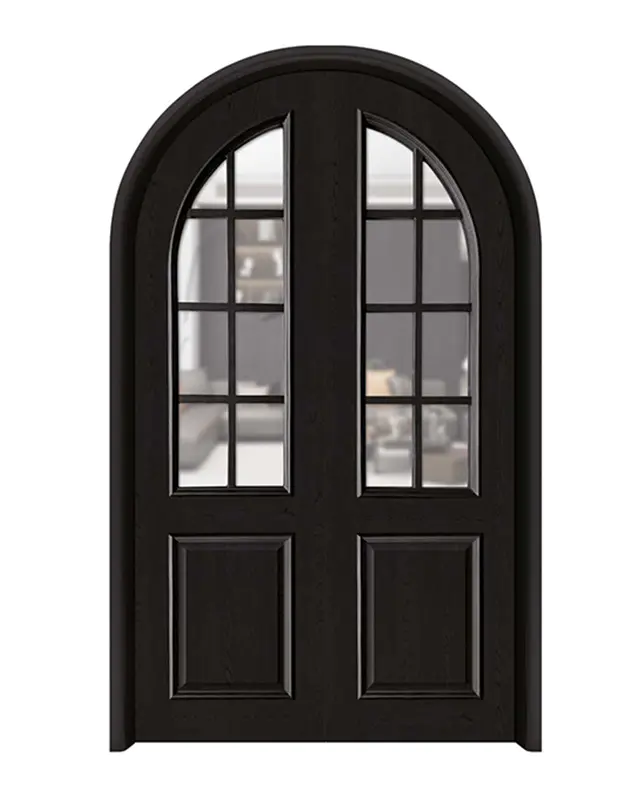
To understand why humidity matters so much with these products, it helps to be clear about what a veneer door is structurally. It is not a solid piece of any one material. It is a composite system — a core substrate (typically engineered wood, hollow-core board, or solid wood composite), an intermediate adhesive layer, and a thin surface veneer of natural wood or reconstituted wood fiber.
Each layer responds to moisture differently. The core may expand and contract at one rate, the adhesive layer has its own tolerance threshold, and the surface veneer reacts independently based on its wood species and thickness. When humidity fluctuates or stays persistently high, these layers move at different rates — and that differential movement is where failure begins.
Why the Adhesive Layer Is the Critical Weak Point
The bond between the veneer surface and the core substrate is what holds the entire product together visually and structurally. In dry interior environments, this bond is essentially indefinite. In high-humidity spaces, it is not.
Moisture migrates into the door through exposed edges, surface micro-pores, and any imperfection in the finish coating. Once inside, it softens the adhesive over time. The softening is gradual and invisible until the bond releases — at which point the surface veneer begins to bubble, lift at the edges, or peel in patches. By the time the problem is visible, it is already advanced.
How Different Humidity Levels Create Different Risk Profiles
Not Every Wet Area Presents the Same Challenge
A guest bathroom in a well-ventilated residential building is a very different environment from a hotel shower room, a spa facility, or a commercial bathroom with sustained high occupancy. The failure risk for veneer doors scales with humidity intensity, duration, and ventilation quality.
Understanding where a specific installation falls on that spectrum is essential for making a sound material decision.
| Space Type | Humidity Profile | Veneer Door Risk Level | Practical Verdict |
|---|---|---|---|
| Powder room / half bath | Intermittent, low humidity | Low to moderate | Usable with sealing precautions |
| Standard residential bathroom | Moderate, regular cycles | Moderate | Conditional — ventilation and sealing required |
| En-suite with daily shower use | High, sustained | High | Not advisable without heavy protective treatment |
| Hotel or commercial bathroom | High, continuous occupancy | Very high | Alternative materials strongly preferred |
| Spa, pool area, or steam room | Severe, near-constant | Severe | Veneer products unsuitable |
The distinction between a powder room and a shower room matters enormously. An interior door wholesale supplier offering veneer products for bathroom use should be specifying clearly which humidity categories their products have been tested and rated for — and buyers should be asking.
What Failure Actually Looks Like Over Time
The Progression from Invisible Damage to Visible Problem
Veneer door failure in humid spaces does not happen overnight. It follows a pattern that project managers and procurement teams need to recognize, because the visible signs appear well after the structural damage has begun.
The typical progression:
- Weeks to months: Moisture begins penetrating through edges and surface imperfections. No visible sign yet, but the adhesive layer is absorbing moisture and softening gradually.
- Several months in: Core substrate begins to swell slightly. The door may become harder to close cleanly, or slight surface irregularities appear at the edges.
- Six to eighteen months: Adhesive releases in localized areas. Surface veneer begins to bubble or lift, particularly at bottom edges and around the latch area where handling has stressed the surface.
- Beyond eighteen months: Delamination spreads. The surface peels in larger sections. Core exposure leads to accelerated moisture absorption and possible structural compromise.
The frustrating aspect of this timeline for contractors is that the problem typically surfaces well after the project has been handed over — which means warranty claims, revisits, and the reputational cost of a visible failure in a client's space.
Edge Damage as an Early Indicator
One of the early physical signs of moisture-related veneer failure is edge damage. The cut edges of a door are vulnerable points — the substrate is exposed at the perimeter, and without careful sealing, moisture enters directly into the core material.
Edge swelling, visible separation between the veneer and the edge banding, and discoloration at the bottom edge of the door are all early warning signs. In projects where veneer doors have been installed in moderately humid spaces without adequate edge sealing, these signs often appear within a year.
Can Veneer Doors Be Made Workable in Humid Spaces?
Protective Measures That Extend Usability — With Limitations
The honest answer is that protective treatments can meaningfully extend the performance of veneer doors in moderate humidity environments, but they cannot transform the product into a fully moisture-resistant one. There is a point of humidity intensity beyond which no treatment makes veneer doors appropriate.
For spaces that fall into the low-to-moderate humidity category — powder rooms, well-ventilated residential bathrooms with exhaust fans — the following measures can make veneer products a viable option:
- Edge sealing: all four edges of the door, including the top and bottom, should be sealed with a water-resistant coating before installation. The bottom edge is particularly important because it sits closest to floor-level moisture.
- Surface finish quality: a closed-pore lacquer or UV-cured coating provides considerably better moisture resistance than an open-pore or oil finish. Buyers sourcing from a China Interior Door manufacturer should confirm the specific finish applied and its moisture resistance rating.
- Frame and hardware selection: the surrounding frame system should also be moisture-resistant. A well-sealed door in a frame that allows moisture ingress at the joint between door and frame provides limited protection overall.
- Ventilation adequacy: no sealing treatment compensates for a poorly ventilated bathroom where humidity remains elevated for hours after each shower use. Adequate extraction ventilation is a baseline condition for any wood-based door in a bathroom setting.
Even with all these measures in place, veneer doors in bathroom settings require monitoring and periodic maintenance — reapplication of edge sealant, inspection of the bottom edge, and attention to any early signs of surface lifting.
What Alternative Materials Actually Offer
Interior Door Material Comparison for Wet Areas
When veneer products are not appropriate for a given humidity level, or when a project requires a material that performs without ongoing maintenance vigilance, the comparison of alternative materials becomes relevant. Knowing how to choose an interior door for wet areas means understanding what each material category actually provides — not just in marketing terms, but in practical installation and lifecycle terms.
Solid wood doors are often assumed to be a straightforward upgrade from veneer, but the assumption is partially misleading. Solid wood is also susceptible to moisture movement — it expands and contracts with humidity changes, and untreated solid wood in a high-humidity space will warp over time. The advantage over veneer is the absence of an adhesive layer and the ability to sand and refinish the surface, which extends the product's serviceable life. For moderate humidity spaces, a properly finished solid wood door outperforms veneer. For severe humidity, it still has limitations.
PVC and UPVC doors remove wood from the equation entirely. They do not absorb moisture, do not warp, and require no sealing maintenance. The trade-off is aesthetic — PVC doors have a different visual character from wood-based products, which makes them less suitable for settings where the interior door is a visible design element. For commercial bathrooms, laundry areas, and utility spaces where performance matters more than appearance, they are a practical choice.
Moisture-resistant engineered wood doors sit between veneer products and PVC on both the performance and aesthetic spectrum. These use a moisture-resistant core material (often an MDF formulation with resin content designed to reduce moisture absorption) combined with a surface treatment that provides better protection than standard veneer. They are not waterproof, but they tolerate intermittent humidity exposure considerably better than standard veneer construction.
Aluminum-framed doors with composite panels are used primarily in commercial and high-humidity commercial settings. They offer structural durability and moisture resistance but require a different installation approach and aesthetic context than typical residential interior doors.
Procurement Considerations When Sourcing for Humid Area Projects
Questions to Ask Any Interior Door Wholesale Supplier
For buyers sourcing interior doors in volume — whether for hotel fit-outs, apartment developments, or commercial building projects — the specification of bathroom and wet-area doors deserves separate attention from standard interior door procurement.
Practical questions for any Interior Door Wholesale Supplier:
- Does the product have a specific humidity rating or tested moisture resistance classification?
- What core material is used, and what is its moisture absorption behavior?
- What surface finish is applied, and is it a closed-pore or open-pore treatment?
- Are the edges pre-sealed from the factory, or does sealing need to happen on-site?
- Is there a separate product line or specification for wet-area installations?
- What warranty conditions apply specifically to bathroom or high-humidity installation contexts?
Suppliers who cannot answer these questions clearly are not equipped to support wet-area specification decisions — regardless of how competitive their pricing is on standard interior door lines.
Why Factory Finish Quality Matters More Than On-Site Treatment
One pattern that appears repeatedly in veneer door failures in humid spaces is the assumption that on-site painting or varnishing provides adequate moisture protection. It often does not — particularly at the edges, where field application of finish coatings is difficult to execute with the consistency and coverage that factory-applied coatings provide.
A door that arrives from the factory with a properly closed-pore finish, sealed edges, and documented moisture resistance testing starts the installation at a meaningfully higher protection level than one that arrives unfinished and is treated on-site. For procurement teams sourcing China Interior Door products at volume, verifying the factory finish specification and requesting product samples for assessment before bulk ordering is a reasonable and protective step.
How to Choose Interior Door Specifications for Mixed-Use Projects
Projects with Both Standard and Wet-Area Spaces
Many projects — hotels, apartment buildings, mixed-use commercial developments — include both standard interior spaces and bathrooms or utility areas within the same build. Managing door specifications across these different environment types within a single procurement creates a practical challenge: using a single door specification simplifies purchasing but may result in an inappropriate product for wet areas, while specifying separately adds complexity.
A workable approach:
- Identify all spaces by humidity category at the specification stage, not after procurement
- Determine which spaces fall below the threshold where veneer products are viable with protective treatment, and which require an alternative material
- Negotiate with the supplier for a primary specification for standard areas and a secondary specification for wet areas, with clear documentation of which products go where
- Ensure installation teams understand which door specification applies in each location and what installation requirements differ between them
Such specification discipline adds time at the front end of the project but reduces the risk of post-handover failures in the spaces likely to generate them.
The question of whether veneer doors are appropriate for bathroom and humid area installation does not have a single universal answer — it depends on humidity intensity, ventilation quality, finish specification, edge treatment, and how much ongoing maintenance a project can realistically support. What is clear is that the decision deserves deliberate analysis rather than a default assumption that any interior door will perform adequately in any interior space. For contractors, procurement managers, and distributors sourcing doors for projects that include wet areas, building the humidity question into the specification and supplier evaluation process — rather than treating it as an afterthought — is an effective way to avoid the warranty claims, rework visits, and client dissatisfaction that veneer door failures in bathroom settings reliably produce. Zhejiang Haibo Door Co., Ltd. offers a range of interior door solutions, including products specified for varying moisture environments, with factory finish options and edge treatment standards designed to support accurate specification for both standard and humid-area installations. If you are evaluating interior door options for a project with bathroom or wet-area requirements, their technical team can help align product specifications to the actual environmental conditions involved.
 Previous


