


 русский
 Français
 Español
 Indonesia
 عربى
عربى



Interior design decisions often force a trade-off that feels unnecessarily binary: pay for solid hardwood and get the look you want, or choose something more affordable and accept that the aesthetic will fall short. For anyone who has priced out a hotel corridor, a residential renovation, or a multi-unit apartment build with solid wood doors throughout, the numbers make that choice uncomfortable quickly. It is not that solid wood does not merit its cost — it is that the cost cannot always be justified when what the door delivers is largely visual. That is the precise gap that the Veneer Interior Door fills. A real wood surface layer bonded to an engineered core, delivering genuine wood grain appearance without the material volume or price of solid timber — and in many conditions, with better dimensional stability than the real thing.
What Is a Veneer Door, Actually?
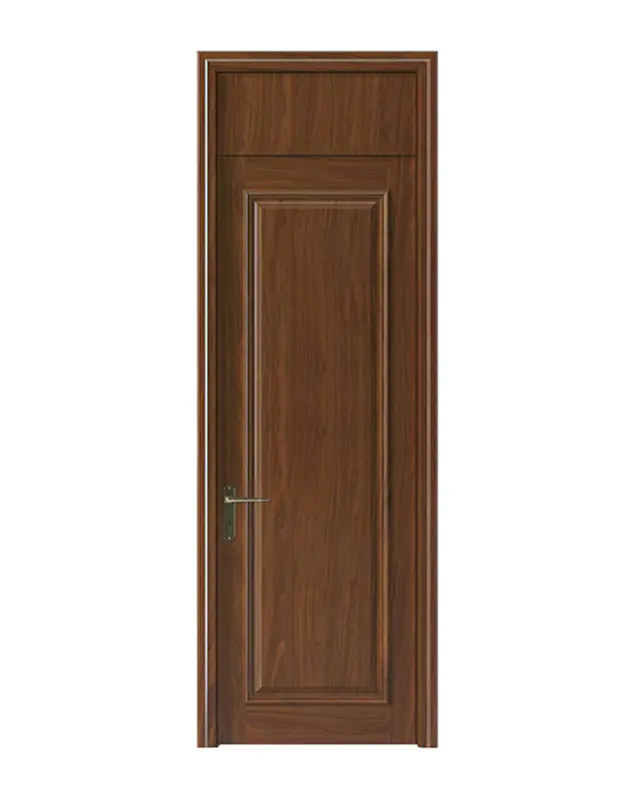
Thin Real Wood Over an Engineered Core
A veneer door is not a simulation. It is not a photograph of wood printed onto a plastic film. A veneer is a thin sheet of actual wood — sliced from a hardwood log — that is bonded to a door core made from engineered materials such as LVL (laminated veneer lumber), MDF, or a solid wood stave construction.
The veneer layer is real wood. Its grain, color variation, and texture come from the same species as a solid wood door of that type. The difference is thickness. Where a solid wood panel uses the full cross-section of the timber, a veneered door uses a sliver of that same timber as a surface layer, with an engineered substrate doing the structural work.
This construction is not a compromise — it is an engineered choice. The core materials used in quality veneer doors are dimensionally stable, resistant to movement from humidity changes, and structurally consistent in ways that large sections of solid timber are not. The veneer surface provides the visual and tactile qualities that define the aesthetic. The core provides the structural performance.
Why Does This Construction Cost Less?
The Economics of Using Wood Efficiently
A single mature hardwood log can yield a large volume of veneer sheet — far more door-facing surface than could be produced from solid planks cut from the same log. Veneer slicing uses the material efficiently, stretching the yield from each tree across a much larger finished surface area. The result is a lower material cost per door face while still using genuine timber.
This efficiency is particularly significant with premium species. Figured walnut, quartered oak, cherry, and similar hardwoods with sought-after grain patterns are expensive in solid form because the volume of material required is substantial. The same species in veneer form delivers an identical visual result — the grain, the color, the natural variation — at a fraction of the material cost.
The savings are not achieved by removing the wood. They are achieved by using it more intelligently. A veneer door with a quality hardwood face costs less than a solid hardwood door of the same species, but the visual difference between them, at normal viewing distance, is negligible.
Is a Veneer Door Structurally Stable?
Engineered Cores and Dimensional Behavior
Solid wood has properties that make it both beautiful and challenging as a door material. It responds to moisture. In humid conditions it expands. In dry heated interiors it contracts. Across seasonal cycles, this movement can cause warping, gaps at frames, swelling that makes doors stick, and surface cracking along grain lines. Managing these problems in solid wood doors requires careful timber selection, proper kiln drying, and ongoing maintenance of the surface finish.
Veneer doors behave differently because their cores are engineered to resist movement. LVL cores alternate the grain direction of each layer, canceling out the directional movement that causes warping. MDF cores have no grain direction and are inherently dimensionally stable. Solid stave cores use narrow pieces arranged to balance internal stress.
The veneer face is thin enough to move with the core rather than fighting it. The result is a door that holds its shape more consistently through humidity and temperature changes than an equivalent solid wood panel — and requires less intervention over its service life to maintain that shape.
How Does Veneer Affect the Visual Outcome?
Surface Appearance and Design Flexibility
One of the practical advantages of veneer construction is the consistency it allows in large projects. When a hotel specifies a door in a particular species and cut — say, crown-cut oak in a medium natural finish — every door in the project can be matched to that specification from the same veneer batch. The grain pattern, color tone, and surface character will be consistent across hundreds of units.
With solid wood, achieving that visual consistency is difficult. Timber varies naturally between trees, between different parts of the same tree, and over time as the material weathers and acclimates. A solid wood door specified from one supplier may look noticeably different from one sourced to fill an order extension later. Veneer, produced from selected logs and sliced in sequence, allows specification-level consistency across large production runs.
The range of available finishes also expands with veneer construction. Species that are prohibitively expensive or structurally unsuitable in solid form — certain rare-growth hardwoods, highly figured cuts, wide-format panels — are achievable in veneer format at practical cost and in structurally sound construction.
Comparing Veneer Doors to Other Interior Door Material Options
Understanding where veneer construction fits relative to other door material categories helps clarify when it is the right specification for a project:
| Door Material | Surface Appearance | Structural Stability | Cost Range | Maintenance Requirement |
|---|---|---|---|---|
| Veneer interior door | Genuine wood grain surface | High — engineered core | Mid-range | Low to moderate |
| Solid wood door | Deep natural grain and texture | Variable — moisture-sensitive | Higher | Moderate — requires finishing |
| MDF with laminate | Printed pattern — not real wood | High | Lower | Low |
| MDF with PVC film | Simulated wood texture | High | Lower | Very low |
| Solid core with paint | Smooth painted finish, no grain | High | Mid-range | Low |
The veneer door occupies a specific position: it delivers real wood appearance and a quality finish, with the structural advantages of an engineered core, at a price point between solid wood and painted or laminated alternatives. For projects where wood aesthetics matter but solid wood cost is prohibitive, this is the material category that resolves the tension between those two requirements.
Why Commercial and Hospitality Projects Favor Veneer Doors
Scale, Consistency, and Durability Drive the Decision
A residential homeowner choosing interior doors evaluates three or four units at a time. A hotel developer, apartment builder, or commercial office fitout project evaluates in hundreds. At that scale, the advantages of veneer construction compound in ways that matter significantly to the procurement and project management process.
Consistent specification across units. As covered above, veneer allows grain and finish matching across large quantities in ways that solid wood cannot reliably deliver.
Cost control at volume. The material cost advantage of veneer over solid hardwood multiplies across a large project. For a developer pricing out a full building, the difference per door becomes a significant budget item in aggregate.
Predictable delivery. Engineered door construction offers greater manufacturing consistency — it is less subject to the material variation that can affect solid wood door production timelines when specific timber grades are required.
Suitability for design programs. Hotel brands and commercial design programs specify exact finishes that must be reproduced consistently across properties and refurbishment cycles. Veneer construction, with its ability to be produced to a controlled specification, suits this requirement better than solid timber.
Interior door wholesale supplier relationships in commercial projects typically involve volume commitments against a specified finish — and veneer products are well-suited to that supply model precisely because they can be produced in volume to a consistent specification.
Does Veneer Scratch or Damage More Easily Than Solid Wood?
Surface Durability in Real Use
A veneer surface is real wood, and its hardness is determined by the species used — the same way it would be for a solid door of the same species. A veneer walnut door surface has the same surface hardness as solid walnut. A veneer oak surface matches solid oak.
The practical difference is repair. If a solid wood door develops a surface scratch deep enough to need repair, the door can be sanded back and refinished — the material depth allows for it. A veneer surface has limited depth, so deep sanding is not possible without risking damage to the veneer layer. Surface finishing — oiling, lacquering, or staining — can be refreshed, but deep abrasion damage is more problematic.
This makes veneer surface care similar to any fine wood surface: use appropriate felt pads under furniture that contacts the door, avoid abrasive cleaning products, and address surface marks before they develop into deep scratches. The surface is genuinely wood and responds to reasonable care in the same way.
For high-traffic commercial environments where surface abuse is likely — hospitality corridors with luggage contact, care facilities with equipment movement — specifying a veneer species with appropriate hardness for the application, combined with a durable surface finish, manages this concern effectively.
Choosing the Right Veneer Species and Finish for the Project
Matching the Door to the Interior Design Brief
Veneer species selection shapes both the visual character of the interior and the practical performance of the door surface. A few practical considerations:
- Light-toned veneers — ash, birch, maple — suit contemporary and Scandinavian-influenced interiors; they tend toward tighter grain patterns and a cleaner visual
- Medium warm tones — oak, teak, cherry — work across a wide range of interior styles and tend to age gracefully as the finish develops
- Deep rich tones — walnut, wenge, dark stained species — suit formal or statement interior contexts; these species often have pronounced grain figures that work as design elements
Surface finish affects both the visual result and the durability of the door face:
- Clear lacquer — protects the natural tone of the wood; durable against everyday contact
- Open-pore finishes — let the texture of the grain read tactilely; require slightly more care
- Stained finishes — alter the base tone while preserving grain visibility; allow species with moderate natural character to be specified in a wider range of colors
For China interior door procurement in volume, confirming the finish specification with the manufacturer before production begins — including a physical sample approval — prevents the color and sheen variations that sometimes appear between what was specified and what arrives on site.
Sourcing Veneer Interior Doors From a Reliable Manufacturer
The promise of a veneer interior door is genuine wood appearance at managed cost. Delivering on that promise over hundreds of units across a large project requires manufacturing consistency in veneer selection, bonding quality, core construction, and surface finishing — factors that vary between suppliers in ways that are not visible from a catalog photograph. Zhejiang Haibo Door Co., Ltd. manufactures veneer interior doors for residential, hospitality, and commercial interior applications, with production processes focused on veneer matching, engineered core stability, and finish consistency across production runs. Their product range covers a variety of species, core constructions, and surface finishes suited to both single-project specification and ongoing supply arrangements for interior door wholesale customers. If you are specifying doors for a project that requires consistent wood aesthetics at commercial scale, or evaluating China interior door supply for distribution or ongoing procurement, reaching out to discuss product specifications, available species, and production capabilities is a practical starting point for matching the right product to your project requirements.
 Previous


