


 русский
 Français
 Español
 Indonesia
 عربى
عربى



A bathroom door might look fine when it is new, but what happens after months of hot showers, regular cleaning, and limited ventilation? That is the kind of question worth asking before choosing a door for a humid room. A modern PVC door is often considered for these spaces because PVC itself does not absorb water like untreated wood. However, the material alone does not tell you whether a particular door will be suitable.
The answer depends on where the door will be installed, what is inside the panel, and how well the door is fitted. A model used in a bedroom may have different requirements from one placed next to a shower or washing machine. Looking at these differences can help homeowners, contractors, and door buyers avoid choosing a product based on appearance alone.
Start With the Room, Not the Door
When people choose an interior door, they often begin with color, panel style, or price. In a bathroom or laundry room, it makes sense to look at the surroundings first.
Some bathrooms dry out quickly after use. Others have little ventilation, and moisture stays on the walls and nearby surfaces for much longer. Laundry rooms can face similar problems, especially when wet clothes are dried indoors. These conditions put different demands on doors, frames, and other fittings.
PVC is worth considering because the material itself resists water absorption. That can be useful in places where ordinary humidity and occasional splashes are part of daily life.
Still, a PVC door is not necessarily made entirely from PVC. Some designs have a PVC surface over a different internal material. If water reaches an exposed edge or an unprotected joint, the inner structure may still be affected.
So, before deciding, ask a simple question: how much moisture will this door actually encounter?
Where Can You Use a Modern PVC Door?
Bathrooms
Bathrooms are an obvious place to consider a moisture-resistant door, but not every bathroom has the same conditions.
If the door is installed away from the shower and mainly exposed to humid air, a suitable PVC interior door may work well. The situation is different when the panel receives frequent splashes or sits close to an area where water collects.
Check the manufacturer's recommendations before choosing a model. Pay attention to the lower edge and the frame, too. These areas are easy to overlook when looking at product photos, yet they can matter during everyday use.
Ventilation should not be ignored. A door cannot solve a problem caused by a bathroom that stays damp for hours. An extractor fan or adequate natural airflow helps remove moisture after showering and reduces the chance of condensation lingering around the doorway.
One thing to keep in mind: a standard interior PVC door should not automatically be used as a shower door. Continuous water exposure calls for a product specifically designed for that purpose.
Laundry Rooms
Laundry rooms often have less ventilation than people expect. Washing machines, wet clothing, and nearby sinks can introduce moisture throughout the day.
A PVC door may be a convenient option if the selected model is suitable for the environment. Its surface is generally easy to wipe clean, which helps when dust or everyday marks build up.
The position of the door still matters. A door beside a leaking connection or an area that is frequently soaked will face different conditions from one exposed to normal indoor humidity. Fixing leaks and improving airflow are more useful than expecting the door material to compensate for a damp room.
Kitchens and Other Utility Areas
In kitchens, steam and grease are often bigger concerns than standing water. Cleaning products can also affect the door finish if they are too aggressive.
Here, the choice should reflect both the room's conditions and the surface care recommended by the manufacturer. A finish that is easy to maintain can be helpful, but it is still important to use suitable cleaning products.
For utility rooms, the same principle applies. Think about the equipment in the room, the location of water sources, and how often the door may get wet.
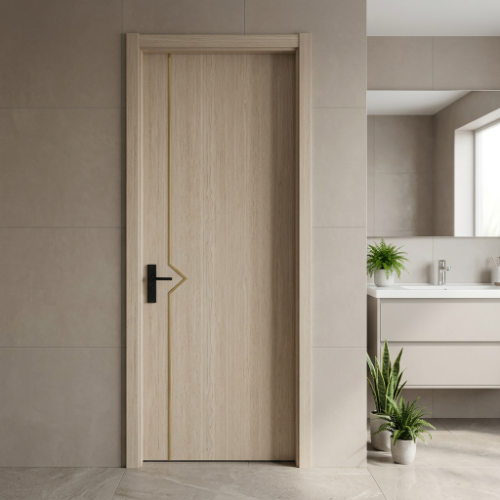
PVC or Wood: What Is the Real Difference?
The choice between PVC and wood-based doors is not simply a matter of deciding which material is better. Both can be suitable for certain applications, depending on their construction and finish.
| What Matters | PVC Door | Wood or Wood-Based Door |
|---|---|---|
| Contact with moisture | PVC itself does not absorb water like untreated wood. | Response depends on the material, finish, and edge protection. |
| Surface appearance | Available in various colors and decorative patterns. | Can offer natural grain or manufactured finishes. |
| Cleaning | Often straightforward with a suitable cleaner. | Depends on the coating and material. |
| Internal structure | May combine a PVC surface with another core material. | May use solid wood or engineered wood. |
| Installation | Needs correct fitting and compatible hardware. | Also requires suitable fitting and protection. |
Consider a bathroom renovation. One buyer may prefer a wood grain finish to match the flooring, while another may want a plain surface that fits a simple, modern interior. Both may find suitable options, but appearance should come after confirming that the product fits the intended environment.
A properly finished wood-based door may be suitable for some bathrooms. Likewise, a PVC door may not be appropriate for a location with constant water exposure. Product details matter more than broad assumptions about the material.
What Should You Check Before Buying?
The front surface is usually the easiest part of a door to inspect. The construction behind it takes a little more effort to understand.
Start by asking what the panel is made of. If the door has a PVC covering over another material, find out how the edges are finished and whether the manufacturer allows the panel to be cut or modified during installation.
The bottom edge deserves attention in bathrooms because it may come into contact with water during floor cleaning. Check whether the model is intended for the conditions in which it will be used.
The frame and hardware also need to be considered. A door panel may remain in good condition while a poorly protected frame deteriorates. Hinges and screws can develop corrosion if their protective finishes are damaged and moisture remains present.
If you are replacing an old door, inspect the existing frame before reusing it. A damp frame or an unresolved leak may cause trouble even after a new panel has been installed.
These are useful questions to raise with a supplier before placing an order:
- Is this model suitable for bathroom or laundry room installation?
- What materials are used inside the panel?
- How are the edges and connection points finished?
- Are there restrictions on direct water exposure?
- Which frames and hardware are compatible with the door?
- Is installation or maintenance guidance available?
The answers should relate to the specific product, not just PVC doors as a general category.
Installation Can Make a Difference
A door that suits the room can still cause problems if it is fitted poorly.
For example, an incorrectly aligned panel may rub against the floor or frame. Loose hinges can affect how the door moves, while unsuitable fixing methods may damage the panel or expose internal materials.
The installer should follow the manufacturer's instructions and make sure the frame is stable before fitting the door. Any sealing work should be carried out as specified for that product. Adding sealant in the wrong place or making unapproved changes may create other problems.
It is also worth checking the floor around the doorway. If water regularly collects there, the underlying drainage or cleaning issue should be addressed rather than left for the door to deal with.
For new construction and renovation projects alike, a little attention during installation can help prevent avoidable maintenance issues.
Keeping a PVC Door Looking Good
PVC doors are generally straightforward to clean, so daily care does not need to become another household chore.
For routine cleaning, a soft cloth and a suitable cleaning solution are usually a reasonable starting point. Follow the manufacturer's instructions, particularly if the door has a decorative surface or special finish. Abrasive pads and strong solvents may cause damage.
In a bathroom, wiping away visible splashes and allowing the room to dry can help keep the surrounding area in good condition. In a laundry room, check for leaks around nearby appliances and water connections.
Every so often, take a look at the door edges, frame, hinges, and handles. If the panel starts to discolor, the edge appears damaged, or the door becomes difficult to close, find out why instead of treating it as a cleaning issue.
A well-maintained surface is useful, but it cannot make up for a damaged internal structure or persistent moisture around the installation.
Buying PVC Doors for Wholesale or Building Projects
For importers, distributors, and contractors, choosing a door involves more than deciding whether it looks suitable. The product also needs to match the project requirements and the expectations of the local market.
Start by explaining the intended application to the manufacturer. A residential bathroom project may have different needs from a large development where doors will be installed across bedrooms, bathrooms, and utility areas.
Design options matter, but they are only part of the discussion. Buyers should also confirm the panel construction, available finishes, compatible frames, packaging arrangements, and agreed quality inspection requirements.
If moisture resistance is a specific concern, ask whether the supplier has relevant product documentation or test information for the model being considered. A sample can help you check color and surface quality, but looking at a sample alone will not establish how the complete door performs in a humid environment.
It is also sensible to confirm installation guidance and product limitations before production begins. Clear communication at this stage can help avoid misunderstandings after the doors arrive.
For manufacturers, knowing where the product will be used helps make the conversation more useful. For buyers, providing that information makes it easier to compare suitable options rather than choosing from appearance alone.
Frequently Asked Questions
Can I install a modern PVC door in my bathroom?
Some models are suitable for residential bathrooms. Check the manufacturer's guidance and consider whether the door will face ordinary humidity, occasional splashes, or frequent direct water exposure.
Does a PVC door mean the whole panel is waterproof?
No. The panel may contain materials other than PVC, and the frame, edges, joints, and hardware may have their own limitations.
Is a PVC door difficult to maintain?
Routine cleaning is generally simple, although the correct method depends on the finish. Use suitable cleaning products and follow the care instructions provided with the product.
What should I ask a door manufacturer before ordering?
Ask about the internal structure, edge finishing, intended application, installation requirements, and available product documentation. Wholesale buyers should also confirm specifications, packaging, and inspection arrangements.
A modern PVC door can be a reasonable option for humid interior spaces, provided the selected model is designed for the conditions it will face. Its resistance to water absorption at the material level and its easy-to-clean surface make it worth considering for many residential applications.
The decision should not rest on the surface material alone. The panel structure, frame, installation, ventilation, and amount of direct water exposure all deserve attention.
If you are comparing options for a home renovation or a larger building project, explain the intended use before choosing a model. Haibo Door can be part of that discussion for buyers exploring modern interior door designs and finishes. Sharing details about the room, preferred appearance, and project requirements gives the manufacturer a clearer basis for discussing available options.
 Previous


