


 русский
 Français
 Español
 Indonesia
 عربى




HPL (high-pressure laminate) suits doors that are touched often. PVC works well for wrapped edges and shaped panels. Melamine is common on finished boards. Paint gives wide color choice, and wood veneer brings natural grain. The right pick depends on where the door is installed and how it is built. The finish name alone is not enough to decide.
Choosing a door finish involves more than color. The surface changes how a door looks, how it feels, how easy it is to clean, and how it handles daily use. For buyers working with an HPL Door Factory or any other door manufacturer, the finish also shapes production choices, maintenance plans, and the overall look of a project.
HPL doors are worth a close look for spaces with regular contact. They are not the answer for every building, though. PVC, melamine, paint, and wood veneer each have a place. The differences show up when you consider how each finish is made, where it will be used, and what the finished door has to do.
What Makes an HPL Door Different from Other Doors?
HPL stands for high-pressure laminate. Layers of material are pressed together under heat and pressure to form a hard decorative sheet. That sheet becomes the outer layer of the door, bonded to a suitable core.
Buyers often look at HPL because the surface is made for regular use. It comes in many colors, patterns, and decorative effects. Depending on the laminate, a door can have a plain color, a wood-inspired look, or another design.
The laminate is only one part of the door, though. The core material, adhesive, edge treatment, and production process all affect the result. A good surface cannot make up for weak bonding or poorly finished edges.
Keep this in mind when you compare factories. Two doors may look alike in photos and still differ in internal structure and finishing details.
HPL vs. PVC Door Finishes
PVC is typically applied as a decorative film over a prepared substrate. It can create a continuous surface across the face and visible edges. It is used for plain colors, wood-grain effects, and panel designs with shaped details.
Both finishes can work in residential and commercial interiors. They are made differently, and performance can vary with the product construction.
| Comparison Point | HPL Door Finish | PVC Door Finish |
|---|---|---|
| Surface construction | High-pressure laminate sheet | Decorative PVC film |
| Appearance | Solid colors and decorative patterns | Colors, wood-grain effects, other designs |
| Surface feel | Depends on the laminate texture | Depends on the film texture and finish |
| Daily use | Often considered for areas with regular contact | Suitable for many residential and interior uses |
| Main checks | Laminate bonding, surface condition, edge finishing | Film adhesion, corner details, edge wrapping |
Choose based on the intended use, not the finish name. HPL may suit a project where the surface is touched often. PVC can be practical when the design needs wrapped edges or shaped details.
Ask how the finish is applied. With PVC, check corners and edges, because the film has to follow the panel shape. With HPL, look at the bonded surface and how the exposed edges are treated.
A physical sample shows details that a catalog image cannot.
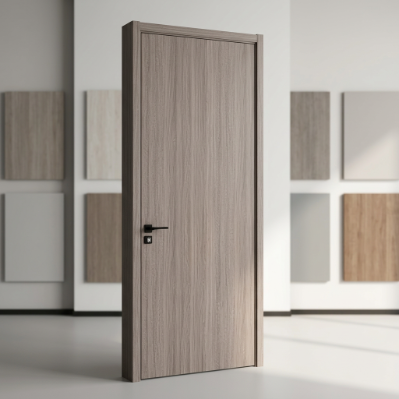
HPL vs. Melamine Door Finishes
Melamine is widely used on interior panels and furniture. Resin-impregnated decorative paper is bonded to a board during manufacturing. This gives a consistent color or wood-grain pattern without a separate paint step.
The two can look similar, especially in wood-inspired designs. The manufacturing methods differ. HPL is pressed into a laminate sheet under high pressure and temperature, then applied to a substrate. Melamine-faced boards usually have the decorative layer bonded straight to the panel during board finishing.
| Comparison Point | HPL Door Finish | Melamine Door Finish |
|---|---|---|
| Manufacturing approach | Laminate sheet applied to a door substrate | Resin-treated paper bonded to a board |
| Design choices | Varies by laminate collection | Varies by paper and board options |
| Common consideration | Surface bonding and edge treatment | Board quality and protection of exposed edges |
| Project suitability | Depends on use, construction, and finish needs | Depends on panel structure and application |
A label does not tell the full story. The core, surface thickness, production quality, and installation conditions all influence how a door holds up.
Consistency matters when a project covers many doors. You may need the same color and pattern across several production batches. Before confirming an order, ask whether the finish can be supplied consistently and whether the factory will keep a reference sample for comparison. That helps prevent gaps between the approved sample and the doors that arrive later.
HPL vs. Painted Door Finishes
Paint is flexible in a different way. It is applied to a prepared surface and can give a smooth look in a wide range of colors. Depending on the coating and method, the result can be matte, satin, or glossy.
Painted doors are common when a project needs a specific color or a clean, continuous look. HPL comes from a decorative laminate, so the available designs depend on the manufacturer's laminate range.
Repair works differently too. A painted surface can be easier to touch up when the coating and color can be matched. Damaged laminate is harder to fix, because the replacement has to match the original pattern and surface.
Both finishes can be damaged. Scratches, impact, cleaning products, and moisture can affect either one, depending on the coating or laminate and the door construction.
A few questions help when comparing the two:
- Will the door be used many times a day?
- Does the project need a specific color that may have to be matched later?
- Will the surface meet bags, equipment, or cleaning tools?
- How will marks or damage be repaired?
- Does the design call for a painted look or a decorative laminate pattern?
These questions are often more useful than comparing finish names.
HPL vs. Wood Veneer Door Finishes
Wood veneer looks different from printed or solid-color finishes. A thin layer of natural wood sits on the surface, so grain and color vary from door to door.
HPL can reproduce wood-inspired patterns, but it does not offer the natural grain variation of real veneer. Some projects benefit from consistency across a large group of doors. Others treat the natural variation as part of the design.
Care needs differ as well. Veneer may need protection against moisture, scratches, and changes in the surrounding environment. HPL also needs proper care, but the approach differs from that used on natural wood.
| Consideration | HPL Door Finish | Wood Veneer Door Finish |
|---|---|---|
| Visual character | Depends on the selected laminate | Natural grain varies between pieces |
| Appearance consistency | Can give a more uniform repeated pattern | Natural variation may appear across panels |
| Surface selection | Depends on available laminate designs | Depends on wood species, grain, and veneer selection |
| Maintenance | Follow the laminate supplier's care guidance | Follow the coating and veneer care requirements |
The decision often follows the interior design. If a project needs a consistent pattern across many doors, HPL may fit. If natural grain is central to the look, veneer may suit it better.
Check the edges too. A door with an attractive face can still look unfinished if the edge treatment does not match the design.
Which Door Finish Makes Sense for Different Applications?
No single finish suits every building. A private bedroom door faces different conditions from one in a busy office corridor or a shared commercial space.
These examples can help narrow the options. The final choice should rest on the full door construction and the project requirements.
| Application | Finishes to Consider | What to Check |
|---|---|---|
| Residential bedrooms | HPL, PVC, melamine, paint, or veneer | Interior design, cleaning routine, budget |
| Office interiors | HPL, melamine, or paint | Daily contact, appearance consistency, maintenance |
| Hotels and shared spaces | HPL, PVC, or other suitable finished doors | Cleaning needs, expected use, edge condition |
| Decorative interiors | Paint, veneer, or decorative HPL | Color coordination, texture, design consistency |
| Repeated door designs | HPL or melamine, depending on the specification | Batch consistency, finish availability |
Treat these as starting points. A door in a busy building needs more than a durable-looking surface. Its core, frame, hardware, installation, and moisture exposure all matter.
For wet or humid areas, ask the factory whether the complete door is suitable. A surface finish does not make a door waterproof, and the edges or core may react to moisture differently from the face.
What Should Buyers Check When Ordering HPL Doors from a Factory?
A sample is useful, but it should not be the sole basis for an order. Buyers also need to understand how the door is built and how the finishing process is controlled.
Check the Core Material
HPL describes the surface, not the whole door. Cores vary with the product design and intended use. Ask which core is proposed and whether it suits the installation environment.
This matters when comparing quotations. Two suppliers may both offer HPL doors with different core constructions, so the products may not be directly comparable.
Look at the Edges and Corners
Edges are easy to miss in product photos. During sample review, inspect corners, joints, and exposed edges. Look for uneven finishing, visible gaps, or lifting.
Ask how the factory finishes the edges. The right method depends on the door structure and the design.
Confirm the Surface and Color
Names such as oak, walnut, gray, or white are too loose to guarantee a match. Ask for a physical sample or an agreed reference for the actual finish.
Where possible, view it under lighting similar to the installation site. Color and texture can look different on a screen, in a showroom, and inside a building.
For large orders, clarify how the factory will keep consistency across batches.
Ask About Cleaning and Maintenance
Finishes respond differently to cleaning products and methods. Request care instructions for the actual surface rather than general advice for laminate doors.
This is especially helpful for offices, hotels, and other buildings where cleaning is part of the routine.
Compare Complete Specifications
A quotation should state what is included. Check the surface material, core construction, edge treatment, dimensions, hardware requirements, and packaging or delivery terms.
A lower price may reflect differences in construction or scope rather than a true saving. Confirming details before production reduces misunderstandings later.
Why the Factory's Finishing Process Matters
The surface material is one part of manufacturing. Preparation, bonding, pressing, trimming, and edge finishing all shape the look of the finished door.
Two factories can use the same HPL design and still produce doors with different construction and finishing details. That is why it helps to evaluate the complete door, not just the surface name. An experienced HPL Door Factory should be able to explain its core options, bonding method, and edge treatment clearly.
For custom projects, raise design changes early. A different core, edge detail, or decorative pattern can affect production planning. Confirming these points before approving the sample gives both sides a clear reference.
For repeat purchases, keep a record of the approved sample, the finish identification, and the agreed construction. It makes later orders easier to coordinate.
HPL, PVC, melamine, paint, and wood veneer serve different purposes. HPL is worth considering when a project calls for a decorative laminate surface meant for regular use. PVC suits a range of wrapped designs. Melamine is common on finished panels. Paint offers wide color choice, and veneer brings natural wood grain.
The most suitable option depends on where the door is installed, how it is used, and what the project expects in appearance and maintenance.
When comparing HPL doors from different suppliers, look at the full construction: core, surface bonding, edges, sample consistency, and care guidance. These details give a clearer basis for comparison than the finish name.
 Previous


