


 русский
 Français
 Español
 Indonesia
 عربى




A few fingerprints near the handle, dust along the edges, or a stubborn mark left by a sticker. These little things can make an otherwise tidy room look untidy. Cleaning a door seems like a simple job, but not every cleaning product is suitable for every surface.
This is particularly worth remembering with a PVC interior door. Although PVC surfaces are generally easy to wipe down, the finish can still be affected by rough sponges, strong solvents, or too much rubbing. A decorative film or textured coating may need a little more care than a plain, smooth panel.
The good news is that everyday cleaning does not require expensive supplies. A soft cloth, clean water, and a mild detergent will handle many common marks. The trick is knowing when to stop rubbing, which products to avoid, and how to deal with stains that do not come off straight away.
Whether you are cleaning a bedroom door at home or maintaining several doors in an apartment building, here are some practical things worth knowing.
Before You Start, Take a Look at the Finish
Have you noticed that two PVC doors can look quite different even when they are made from similar materials?
One may have a smooth white surface, while another has a wood-grain pattern or a matte decorative finish. These differences are not just about appearance. They can also influence how dirt collects and how the surface should be cleaned.
For example, dust tends to settle in the small grooves of textured designs. Fingerprints, on the other hand, are often easier to notice on smooth panels, especially around handles.
There is another detail worth checking: some doors use decorative surface films or additional coatings. The cleaning advice for one finish may not apply to another.
If you have the original product information, take a look before choosing a cleaning agent. It is a small step, but it can save you from experimenting with products that were never intended for that surface.
What Do You Actually Need to Clean the Door?
You probably already have everything required at home.
| Cleaning item | What it is used for |
|---|---|
| Microfiber cloth | Removing dust and fingerprints |
| Mild household detergent | Cleaning ordinary dirt and light grease |
| Clean water | Wiping away detergent residue |
| Soft-bristle brush | Reaching textured areas and narrow grooves |
| Dry cotton cloth | Removing moisture after cleaning |
There is no reason to use several different cleaners for an ordinary cleaning job. In fact, using too many products can make things harder.
A mild detergent diluted in water is usually a reasonable starting point. Avoid concentrated formulas unless the door manufacturer specifically recommends them.
How to Clean a PVC Interior Door Without Leaving Scratches
The order of cleaning makes a difference. Rubbing dust and dirt across the panel can leave unwanted marks, so start with the dry work before reaching for water.
Get Rid of Dust First
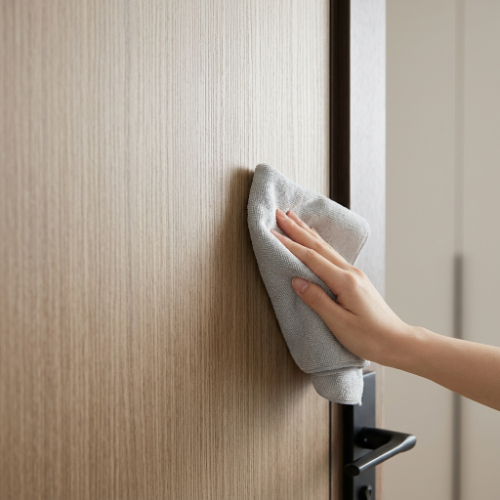
Take a clean microfiber cloth and wipe the door gently.
Start at the top and work downward. Do not forget the corners, panel edges, and the area around the handle. These spots often collect dust without being particularly noticeable.
If the door has a wood-grain pattern, a soft brush can help remove particles from the grooves.
One thing to avoid is using an old cloth that has been used to clean floors, windows, or other dusty surfaces. Tiny particles trapped in the fabric may scratch a delicate finish.
Wipe With Mild Soapy Water
Add a small amount of mild detergent to clean water. Dip the cloth into the solution and wring it out properly.
You want a damp cloth, not one that drips water.
Wipe the panel using gentle movements. If there is a fingerprint or a visible mark, spend a little longer on that area rather than pressing harder.
It is also a good idea to clean the door in sections. This makes it easier to notice whether any dirt has been left behind.
Do Not Forget to Remove Soap Residue
After cleaning, use another cloth dampened with clean water.
This removes detergent that might otherwise dry on the panel and leave streaks. It is particularly useful on darker or smooth finishes, where residue can be easier to see.
Avoid pouring water directly onto the door. Keep moisture away from joints, exposed edges, and hardware connections.
Dry the Surface Before Finishing
Use a clean, dry cloth to wipe away remaining moisture.
Pay particular attention to the lower edge and the areas around the handle. These parts are often missed during a quick cleaning session.
Once the surface has dried, check whether it looks consistent. If you notice a change in color or texture, do not immediately try another cleaning chemical. The issue may not be dirt.
Fingerprints Are Easy to Remove, but What About Grease and Adhesive?
Not every mark on an interior door comes from ordinary use. Kitchen grease, children's stickers, and residue from protective labels can all create different cleaning challenges.
Using the same method for every stain is not always a good idea.
Fingerprints Around Door Handles
This is probably the area that gets dirty quickest.
Hands leave natural oils on the surface, and repeated contact gradually makes the marks more noticeable. A soft cloth with diluted mild detergent is usually enough.
For doors in busy households, wiping the handle area occasionally can prevent fingerprints from building up.
Grease Marks Near the Kitchen
Kitchen doors sometimes develop a slightly sticky surface because of airborne cooking grease.
A mild detergent solution can help loosen the deposit. Wipe gently and repeat if necessary.
Avoid reaching immediately for a powerful kitchen degreaser. Some products contain ingredients that may not be suitable for PVC or its decorative finish.
If the mark remains after gentle cleaning, check the manufacturer's recommendations before trying something stronger.
Sticker Glue and Adhesive Residue
This is where people often make mistakes.
A small piece of adhesive can be surprisingly difficult to remove, especially after a label has been left on the surface for a long time. Scraping it with a knife or metal tool may remove the glue, but it can also leave a scratch.
Start by checking whether the manufacturer recommends an adhesive remover for the particular finish.
Do not assume that alcohol, nail polish remover, or other household solvents are safe. Their effect depends on the material and surface treatment.
Watermarks and Dried Stains
A few water droplets may leave visible marks after drying.
Try wiping the area with a clean, slightly damp cloth and then drying it. If the mark stays, it may be mineral residue or a change in the finish rather than ordinary dirt.
Repeated scrubbing is unlikely to help if the surface itself has been affected.
Which Cleaning Products Should You Keep Away From PVC Surfaces?
A cleaner that works on bathroom tiles may not be suitable for an interior door. This is particularly important when the door has a decorative film or a special surface treatment.
Here are some products that deserve caution:
- Abrasive cleaning powders: Their particles can leave scratches or change the appearance of the finish.
- Strong bleach-based cleaners: Certain formulations may cause discoloration.
- Acetone and paint thinner: These solvents can affect PVC and some decorative surface materials.
- Industrial degreasers: They may contain chemicals intended for equipment rather than household door surfaces.
- Unverified furniture polish: Wax or polishing ingredients may leave an unwanted layer on the panel.
Melamine sponges, sometimes sold as magic erasers, also deserve attention. They may feel soft, but their cleaning action can be abrasive. Using one repeatedly on a matte or decorative surface may change its appearance.
The safest approach is not to experiment with several products until something works. Check the door care instructions and test any approved cleaner in a hidden area first.
Does a Wood-Grain PVC Door Need Different Maintenance?
It can.
Wood-grain designs are popular in residential interiors because they bring a warmer appearance to a room without using natural timber as the visible surface. However, their textured details may collect more dust than a completely flat panel.
The cleaning method should reflect the finish.
| Surface design | Common issue | Cleaning consideration |
|---|---|---|
| Smooth panel | Fingerprints and streaks | Use a clean microfiber cloth |
| Matte finish | Uneven rubbing marks | Avoid repeated scrubbing |
| Wood-grain pattern | Dust in recessed details | Use a soft brush |
| Decorative film | Sensitivity to certain chemicals | Follow the manufacturer's guidance |
| Light-colored panel | Visible everyday dirt | Wipe marks before they accumulate |
A wood-grain door does not need to be cleaned aggressively just because it has more texture. A soft brush and a damp cloth are usually a sensible combination for ordinary maintenance.
Matte finishes deserve similar attention. If one small area is rubbed repeatedly, it may begin to look different from the surrounding surface.
Five Habits That Can Shorten the Life of a Door Finish
Sometimes the problem is not the dirt itself, but the way someone tries to remove it.
Here are a few habits worth changing.
1. Scrubbing a stain immediately
A stubborn mark does not always need more pressure. Give a mild cleaning solution time to loosen ordinary dirt, then wipe gently.
2. Using the same sponge for every surface
A sponge used on rough tiles or kitchen equipment may contain particles that can scratch a door panel. Keep a separate soft cloth for door maintenance.
3. Leaving cleaning solution to dry naturally
Detergent residue can create streaks. Wipe it away with clean water before drying the surface.
4. Allowing water to collect around the edges
The visible panel is only one part of the door. Joints, edges, and internal components may have different moisture tolerances.
5. Trying to polish away scratches
A scratch is not the same as a stain. Ordinary cleaning products cannot necessarily repair damage to a decorative film or coating. Check with the manufacturer before attempting any surface repair.
How Often Should You Clean Interior Doors?
That depends on where the door is installed.
A bedroom door in a quiet home may stay clean for quite a while. A kitchen door or a door in a shared apartment may collect fingerprints and dirt much faster.
There is no need to wash every door on a fixed schedule. Pay attention to how it is being used.
For general maintenance, a practical approach is:
- Remove dust whenever it becomes visible.
- Wipe fingerprints and fresh stains when necessary.
- Give the full panel a gentle clean when dirt starts to accumulate.
- Check handles, hinges, and edges during ordinary cleaning.
For bathrooms and other moisture-prone spaces, also keep an eye on ventilation and the condition of the surrounding joints.
Regular light cleaning is easier than dealing with dirt that has been left on a surface for a long time.
What Should Importers and Project Buyers Know About Door Maintenance?
Cleaning requirements are worth discussing before an order is placed, particularly when purchasing doors in bulk.
For an importer or distributor, the question is not simply whether a door looks attractive in a product photograph. Buyers also need to understand its surface material, construction, intended application, and maintenance requirements.
For example, a project involving several apartment units may use different colors or decorative finishes. If those finishes have different care recommendations, this information should be available before the products reach the end user.
Before confirming an order, consider asking the manufacturer about:
- Surface treatment: Is the door finished with a decorative film, a textured surface, or another treatment?
- Available designs: Which colors, patterns, and surface appearances can be supplied?
- Door construction: What materials are used for the panel and internal structure?
- Intended application: Which indoor environments are suitable for the selected product?
- Maintenance instructions: What cleaning products and methods are recommended?
- Customization: Can different door designs be coordinated for the same project?
These details are useful when preparing product specifications, communicating with installers, and answering questions from distributors.
For manufacturers, providing clear maintenance information is also part of helping customers understand the product after delivery.
At Haibo Door, buyers can discuss door styles, surface appearances, and project requirements when considering products for different interior spaces. Understanding the intended use before production helps both parties clarify the product selection.
Frequently Asked Questions
Can I Use Dish Soap to Clean a PVC Door?
Yes, mild dishwashing detergent diluted in water may be suitable for ordinary dirt and fingerprints. Use a soft cloth and remove any remaining soap with clean water. Always check compatibility with the specific surface finish.
Will Alcohol Damage a PVC Interior Door?
It may. Some alcohol-based cleaners can affect decorative films, coatings, or other surface treatments. Avoid using them unless the manufacturer confirms that the product is suitable.
Why Does My PVC Door Look Dull After Cleaning?
Detergent residue, excessive rubbing, unsuitable chemicals, or existing surface wear may be responsible. Try wiping the panel with a clean damp cloth and drying it. If the dull appearance remains, ask the manufacturer for advice.
Can I Use a Steam Cleaner on a PVC Door?
Steam cleaning is not recommended for every door construction. Heat and moisture may affect adhesives, decorative layers, joints, or internal components. Check the product instructions before using steam.
Are PVC Doors Suitable for Bathrooms?
Some PVC door designs are used in bathrooms because their surfaces can be wiped during routine cleaning. However, suitability depends on the complete door construction, installation details, and moisture conditions. Confirm the intended application with the supplier.
Can Scratches Be Removed From a PVC Door?
It depends on the type of damage. A removable surface mark may disappear with gentle cleaning, but a scratch that affects the decorative layer may require a different solution. Avoid sanding or applying polishing compounds without manufacturer guidance.
A clean door does not need a complicated maintenance routine. For everyday dirt, a soft cloth and mild soapy water are usually enough. Removing dust first, avoiding abrasive materials, and drying the panel afterward can prevent many common cleaning problems.
What matters is understanding the surface. A smooth panel, a matte finish, and a wood-grain design may have different care requirements, even when they are all used as interior doors.
For homeowners, a little attention during routine cleaning can help maintain the appearance of the door. For distributors, contractors, and importers, understanding these details before purchasing makes it easier to provide useful maintenance guidance to customers.
When a stain refuses to come off, resist the urge to reach for a stronger chemical. Checking the manufacturer's recommendations is often a much better place to start.
 Previous


