


 русский
 Français
 Español
 Indonesia
 عربى
عربى



Choosing an interior door is one of those decisions that quietly shapes how a home feels every single day—and it starts earlier than many people think, often at the interior door factory where materials, cores, finishes, and tolerances determine whether a door will feel solid, close smoothly, and stay stable through seasons. At Haibo, we look at interior doors not as simple partitions, but as functional design elements that control privacy, sound, light, circulation, and the overall rhythm of a space.
Interior doors are, in plain terms, doors designed for use inside a building rather than at the exterior envelope. But that definition is only the beginning. A great interior door creates comfort and flow: it makes bedrooms feel private, home offices quieter, bathrooms safer, hallways brighter, and closets easier to access. It can also unify a design style—minimal, classic, Scandinavian, modern farmhouse—without needing constant décor changes.
The Real Job of an Interior Door
Interior doors do more than separate rooms. In well-designed interiors, they act like "soft architecture," shaping how people move, hear, and see within a home.
Key functions of interior doors:
- Privacy control: Bedrooms, bathrooms, and offices depend on reliable closure and lock options.
- Sound management: A solid, well-fitted door can meaningfully reduce noise transfer between rooms.
- Light shaping: Glass doors, frosted panels, or transoms can borrow daylight without sacrificing layout.
- Thermal zoning: Even inside, doors help keep conditioned air where you want it (useful for HVAC efficiency).
- Safety and compliance: Certain applications require fire-rated assemblies or moisture-resistant constructions.
- Design continuity: Door style, panel layout, and hardware finish can unify the entire interior language.
A door that feels "premium" is usually not about the paint color—it's about core density, edge stability, hinge alignment, latch precision, and the frame/stop system.
Interior Door vs. Exterior Door: What's the Difference?
Exterior doors are built to handle weather, security, insulation, and exposure. Interior doors are optimized for indoor comfort and aesthetics.
Typical differences:
- Weather resistance: Exterior doors need high weatherproofing; interior doors generally do not.
- Insulation value: Exterior doors often require higher thermal performance; interior doors focus more on acoustics and fit.
- Security: Exterior doors usually include stronger locksets and reinforcement.
- Materials and construction: Interior doors often use engineered wood, MDF skins, or veneer over a core; exterior doors may use fiberglass, steel, or heavier composites.
That said, interior doors still face real stresses: humidity changes from bathrooms, bumps from furniture, and repeated daily use. Choosing the right construction prevents warping, cracking, or loose hardware over time.
The Main Types of Interior Doors
When people say "solid door" or "hollow door," they're usually talking about what's inside the slab.
| Door Type | What They Are | Advantages | Limitations | Best For |
|---|---|---|---|---|
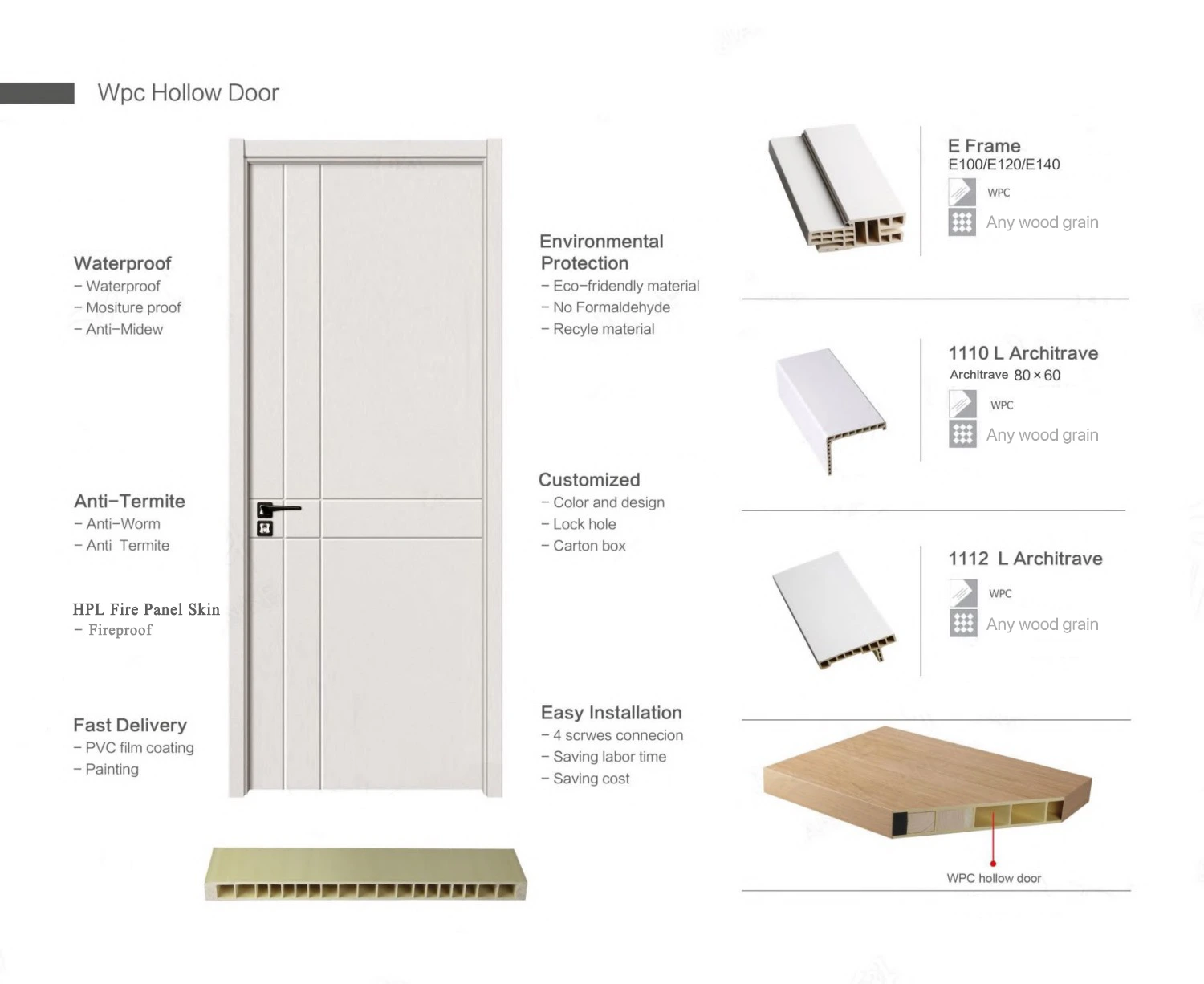
| Hollow Core Doors | Thin skin over a honeycomb or lattice core | Low costLightweightEasy to install | Poor sound insulationFeels less solidEasily damaged | Closets, pantries, light-use rooms |
| Solid Core Doors | Dense engineered core with a durable surface | Better sound controlSolid feelMore durable | HeavierMore expensive than hollow core | Bedrooms, offices, shared-wall spaces |
| Solid Wood Doors | Made mainly from natural wood | Natural lookStrong and classicRefinishable | Affected by humidityHigher costHeavy | High-end interiors, feature doors |
| MDF / Engineered Doors | MDF or engineered skins for paint finishes | Smooth paint surfaceStableSharp profiles | Paint-grade onlyNot for wood grain looks | Modern and minimalist interiors |
Interior Door Styles
A) Panel Doors (Classic to Modern)
Panel doors can be 2-panel, 3-panel, 4-panel, 6-panel, and more. Panel layout can instantly shift the style:
- Traditional: more panels, more detail
- Modern: fewer panels, cleaner lines (e.g., Shaker 1-panel)
B) Flush Doors (Minimal and Modern)
A flush door is flat and sleek—ideal for modern interiors, hotels, offices, and minimalist residential design.
C) French Doors (Light + Elegance)
French doors use glass panes (clear, frosted, reeded) to share daylight between rooms. Great for studies, dining rooms, and living spaces.
D) Barn Doors (Statement + Space-Saver)
Sliding barn doors sit on an exterior track. They're visually bold and save swing space, but they don't seal like hinged doors—so privacy and sound control are limited.
E) Pocket Doors (Clean, Space-Efficient)
Pocket doors slide into the wall cavity. Excellent for tight spaces, but they require correct framing and hardware planning.
F) Bifold / Bypass Doors (Closets and Utility Areas)
Common for closets and laundry zones. Easy access with less swing clearance.
5) Key Parts of an Interior Door System
People often focus on the door slab and forget the system around it.
A complete interior door system includes:
- Door slab: the door itself (core + skin + edge)
- Frame/jamb: the surrounding structure
- Casing/trim: the visible finish molding
- Stops: strips that the door closes against
- Hinges: often 2–4 depending on weight and height
- Latch/lockset: privacy, passage, or dummy function
- Seals (optional): for sound, light, or smoke control in specific applications
A high-quality slab installed in a poor frame will still close badly. For the consistent results, door selection and installation quality must match.
Sizes and Swing: What to Know Before You Buy
Interior doors come in standard sizes in many markets, but your project may need custom sizing—especially in renovations.
Important sizing considerations:
- Width: common for bedrooms and general rooms; wider for accessibility.
- Height: standard heights vary; taller doors (e.g., 2200–2400 mm or 8 ft) create a more upscale look.
- Thickness: thicker doors generally feel more premium and may improve sound performance.
- Swing direction: left-hand vs. right-hand, inswing vs. outswing.
- Clearances: undercut for airflow (especially in HVAC returns), floor finishes, and rugs.
Tip: Decide your floor finish before final door sizing. A new thicker floor can change clearances enough to cause scraping.
Sound Control: Why "Solid" Often Matters
One of the biggest reasons homeowners upgrade is noise. If you've ever heard conversations through a thin door, you already know why.
What improves acoustic performance:
- Solid core construction
- Tight, even reveals around the slab
- Quality latch alignment (a door that doesn't latch properly leaks sound)
- Perimeter seals (for premium acoustic doors)
- Heavier door mass (generally, more mass = better sound reduction)
If you're designing a nursery, home office, shared bedroom wall, or media room, prioritize a solid core with a well-built frame and correct installation.
Moisture and Bathrooms: Choosing the Right Door for Humid Spaces
Bathrooms and laundry rooms create frequent humidity swings. Interior doors used there should resist swelling, edge damage, and finish failure.
Better choices for humid areas:
- Properly sealed engineered doors
- Moisture-resistant cores/skins (depending on specification)
- High-quality paint systems and sealed edges
- Ventilation planning (fans, undercuts, or louver options where appropriate)
A bathroom door that sticks in summer is usually a combination of moisture + insufficient sealing + poor clearances.
Fire-Rated Interior Doors
Not every home needs fire-rated interior doors, but some multi-family, hospitality, or code-driven spaces do.
Fire-rated systems typically require:
- A door slab with a tested rating
- Rated frame and hardware
- Correct installation method (rating is a system, not a single part)
If your project requires compliance, specifications must be clear from the start so the correct assembly is supplied and installed.
Finishes: Paint, Veneer, Laminate, and Texture
Finish is where performance and style meet. It affects durability, cleaning, and the door's long-term look.
Common finish routes:
- Paint-grade: clean, versatile, easy to refresh over time; suitable for modern palettes.
- Wood veneer: natural look with controlled stability; ideal for warm interiors and upscale projects.
- Laminate/CPL/HPL surfaces: durable, scratch-resistant options often used in commercial or high-traffic interiors.
- Special textures: subtle woodgrain or matte tactile finishes can hide fingerprints and add sophistication.
For a cohesive design, coordinate your door finish with baseboards, wall color, and hardware tone (matte black, satin nickel, brushed brass, etc.).
Hardware: The Detail People Touch Every Day
Hardware is the "interactive" part of a door. Even a beautiful door can feel underwhelming with loose handles or poor latching.
Key hardware choices:
- Hinge type: standard, concealed, soft-close (in some systems)
- Lock function: privacy (bath/bed), passage (hall/closet), dummy (decorative)
- Handle style: lever vs. knob (many prefer levers for accessibility)
Stop and bumper planning: protects walls and keeps the door aligned over time
A premium interior experience often comes down to a simple moment: the door closes smoothly, latches cleanly, and feels quiet and solid.
How to Choose the Right Interior Door
- Bedrooms
Prioritize solid core, stable construction, and a privacy lock option. Consider taller doors for a calm, elevated feel.
- Bathrooms
Moisture resistance matters. Use a reliable privacy latch and select finishes that tolerate frequent cleaning.
- Home Offices
Choose solid core and consider enhanced sealing if you take calls often. Glass can look great, but think about privacy first.
- Living Rooms / Dining Rooms
Style often leads—French doors, wide openings, and statement designs can work beautifully. If you want openness, glass is excellent.
- Closets / Utility
Hollow core, bifold, or bypass doors are practical and cost-effective. Durability still matters if used daily.
- Laundry / Mechanical Areas
Choose doors that handle bumps and humidity, and consider airflow needs.
Common Mistakes to Avoid
- Picking style before function: The prettiest door won't help if you need sound control or moisture resistance.
- Ignoring the frame: A poor jamb or bad hinge alignment creates sagging, rubbing, and gaps.
- Underestimating weight: Solid core and tall doors need the right hinge count and quality.
- Mismatching finishes: Hardware tone, trim style, and door design should share a consistent language.
- Not planning for glass privacy: Clear glass looks great—until you need privacy. Frosted or reeded glass can be the ideal compromise.
Interior Door Trends That Feel Timeless
Trends come and go, but some directions have lasting value:
- Shaker and minimalist paneling: clean lines that work in many homes
- Taller doors: creates a more spacious, premium proportion
- Matte finishes: modern, calm, and easier on fingerprints than high-gloss
- Warm wood tones: walnut and oak-inspired looks bring comfort back into modern spaces
- Black or dark hardware: adds contrast and definition without heavy decoration
- Textured/frosted glass: keeps light moving while maintaining privacy
The "trend" is the one that supports your lifestyle—quiet bedrooms, brighter corridors, or more flexible room divisions.
A Simple Checklist Before You Finalize Your Door Selection
Use this to make sure nothing important is missed:
- Where is the door used (bedroom, bath, closet, office)?
- Do you need privacy, sound reduction, or moisture resistance?
- Hinged, sliding, pocket, barn, bifold—what operation fits the space?
- What style matches your interior: flush, Shaker, multi-panel, glass?
- What finish is best: paint-grade, veneer, laminate?
- What size and swing direction are required?
- What hardware function and finish do you want?
- Any special requirements (fire rating, accessibility, acoustic sealing)?
FAQ: Quick Answers About Interior Doors
What is an interior door made of?
Commonly engineered wood, MDF skins, veneer over a core, or solid wood—chosen based on budget, performance, and finish goals.
Is solid core worth it?
For bedrooms, offices, and quiet comfort, yes. It usually feels better, lasts longer, and reduces noise compared to hollow core.
What's the popular interior door style today?
Clean-lined styles like Shaker and flush doors are widely used because they fit both modern and transitional interiors.
Can interior doors have glass?
Yes—clear, frosted, reeded, and decorative glass options can increase light flow while balancing privacy.
How do I make an interior door feel more "high-end"?
Choose a solid core (or high-quality engineered construction), go taller if possible, keep reveals tight, and select durable hardware with a smooth latch.
Interior Doors Are Quiet Upgrades With Big Impact
An interior door is one of the few architectural elements you interact with constantly—morning routines, work calls, bedtime quiet, family movement, and everyday comfort. When the construction matches the space and the design matches the home, doors stop being "just doors" and become part of a better living experience.
At Haibo, we view interior doors as a balance of engineering and aesthetics—the right core for the job, a finish that fits your design, and the kind of daily usability that makes a home feel calm, private, and complete.
 Previous


