


 русский
 Français
 Español
 Indonesia
 عربى
عربى



From Haibo Interior Door Factory standpoint, the choice between minimalist and classic interior door styles is no longer just about aesthetics—it reflects how people live, work, and define comfort inside their spaces. Interior doors quietly shape daily experience: how light moves from room to room, how sound is managed, how private or open a space feels. As residential and commercial design continues to evolve, minimalist and classic styles remain two dominant directions, each with its own logic, craftsmanship requirements, and long-term value.
The Role of Interior Doors in Modern Spatial Design
Interior doors tend to be overlooked in modern spatial design, even though they stand where architecture meets furniture and everyday routines. A carefully considered door goes beyond simply separating rooms. It shapes how spaces transition, helps maintain consistent proportions, and quietly supports the overall visual logic of the interior.
From the viewpoint of an interior door factory, every door has to satisfy several practical demands at once. It needs to look coherent alongside walls, flooring, and other furnishings while remaining sturdy enough to handle frequent opening and closing over many years. The chosen materials must stay stable when temperature and humidity shift, and the whole assembly should be straightforward to install and later service without much trouble.
Minimalist and classic approaches meet these same requirements in quite different ways, which leads to noticeable differences in both design emphasis and production methods.
Minimalist interior doors trace back to modernist architecture, where the guiding ideas were simplicity, clear function, and an atmosphere free of visual clutter. Today’s version of minimalism rarely aims for completely bare rooms. Instead it focuses on cutting away anything that creates unnecessary distraction.
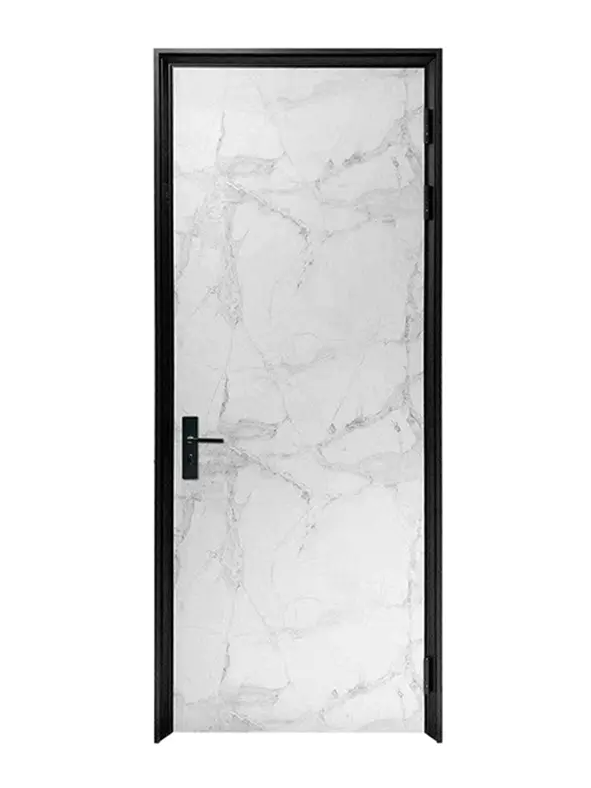
Typical features of minimalist doors include mostly flat or very slightly recessed surfaces, edges and profiles kept deliberately simple and continuous, colors drawn from a narrow neutral range, and hardware that is either fully hidden or reduced to the thinnest possible profile. Rather than acting as an independent decorative feature, the door is meant to merge visually with the surrounding wall surface.
Common Design Elements
- Flush door panels with no raised molding
- Invisible or concealed hinges
- Recessed or integrated handles
- Slim aluminum or shadow-gap frames
In many projects, the goal is for the door to feel almost architectural—part of the structure rather than a separate object.
Minimalist and classic interior door styles have both endured for decades, and looking at their historical roots shows why neither has faded away.
Historical Context: Why These Two Styles Persist
Classic doors grew out of an era when most interior woodwork was made by hand, usually custom-built for a specific room or house. The raised panels and detailed moldings people associate with them served a real purpose beyond looks; those elements helped stiffen solid timber against movement and splitting. Even now classic doors carry associations with lasting quality, deep-rooted tradition, and a sense of established architecture. That explains their steady demand in large villas, older buildings undergoing careful restoration, luxury hotels, and upscale private homes.
Minimalist doors gathered strength later, mainly as cities grew denser and apartments turned toward smaller footprints with fewer dividing walls. Clean, unadorned surfaces fit naturally into open-plan arrangements, worked well with exposed concrete or large glass areas, and helped create a quieter visual field amid fast-paced urban routines. At the same time improvements in factory equipment made it possible to hold very tight dimensions and integrate hidden hinges or sliding mechanisms without visible compromise.
When you compare how these doors are actually built, the choice of materials stands out as one of the sharpest differences.
Manufacturers of minimalist doors usually turn to engineered products that deliver reliable flatness and long-term dimensional stability. Common choices include a core made from composite wood, surface layers of MDF or high-density fiberboard, occasional aluminum perimeter framing, and finishes ranging from thin veneers and printed laminates to uniform matte coatings. All of these help keep the door perfectly level over time and minimize the chance that seasonal changes in moisture will cause noticeable distortion.
Typical Materials for Minimalist Doors
Minimalist doors often rely on engineered materials for consistency and stability:
- Engineered wood cores
- MDF or HDF skins
- Aluminum frames
- Laminates, veneers, or matte paint finishes
These materials support flat surfaces and reduce the risk of warping.
Typical Materials for Classic Doors
Classic doors frequently use materials that highlight texture and depth:
- Solid wood or solid wood frames
- Engineered cores with solid wood veneers
- Decorative moldings (wood or composite)
An Interior Door Factory producing classic styles must carefully manage moisture content and grain orientation to ensure long-term stability.
Manufacturing Differences from an Interior Door Factory Viewpoint
Precision vs. Craft Emphasis
A misalignment of even a few millimeters can disrupt the visual effect, especially with concealed frames.
Classic doors, while still precise, allow more tolerance due to their layered design and decorative profiles.
| Aspect | Minimalist Interior Doors | Classic Interior Doors |
|---|---|---|
| Panel design | Flat, uniform | Multi-panel, profiled |
| Hardware | Concealed, integrated | Visible, often decorative |
| Finishing | Smooth, matte or satin | Painted or stained, layered |
| Quality control focus | Alignment, surface perfection | Detail consistency, joint integrity |
Both styles require expertise, but the challenges differ significantly.
Installation Considerations
Installation makes a big difference in whether minimalist or classic doors end up looking right and working smoothly over time.
Minimalist doors demand a lot more precision from the start. The rough opening in the wall has to be perfectly plumb and square because there is almost no trim to hide small errors. Drywall edges and finished flooring need careful alignment early in the process and the installers must know how to handle concealed hinges or flush tracks without leaving gaps or misalignments. Even slight unevenness shows up right away against those flat unbroken surfaces.
Classic doors allow more leeway during fitting. The surrounding casings and any added moldings can bridge over minor dips or bows in older plaster or uneven framing so they suit renovation work where walls are rarely dead straight. This built-in tolerance often makes them quicker to hang in homes that were not built with modern tolerances in mind.
The two styles shape the feel of a room in noticeably different ways once they are in place.
Minimalist doors help keep things quiet and open. They reduce visual interruptions so spaces flow together more easily and the overall atmosphere stays calm and spacious. That effect works especially well in offices, compact city apartments, or houses built around contemporary lines.
Classic doors bring a warmer more grounded presence. Their defined panels and trim mark clear separations between rooms while adding layers of detail that feel familiar and settled. People tend to pick them for bedrooms private studies or living areas meant to carry a touch of traditional comfort or quiet elegance.
Acoustic and Functional Performance
Interior doors are not only visual elements—they also affect comfort.
Sound Insulation
Minimalist doors often rely on engineered cores for sound control. When properly specified, they can perform well acoustically, though ultra-thin designs may compromise insulation.
Classic doors, especially solid-core versions, naturally provide better sound dampening due to mass and layered construction.
Durability and Maintenance
| Aspect | Minimalist Interior Doors | Classic Interior Doors |
|---|---|---|
| Panel design | Flat, uniform | Multi-panel, profiled |
| Hardware | Concealed, integrated | Visible, often decorative |
| Finishing | Smooth, matte or satin | Painted or stained, layered |
| Quality control focus | Alignment, surface perfection | Detail consistency, joint integrity |
Deciding between minimalist and classic doors often comes down to three main considerations drawn from long-term project experience in an interior door factory. The first is how well the choice aligns with the building’s overall architectural character. The second involves how people actually move through and use the rooms day to day. The third centers on what level of upkeep the owners expect over the years ahead.
Minimalist doors usually prove the stronger option in settings that already lean modern. Think compact urban apartments, professional offices, or any layout built around open plans where walls are kept to a minimum. They also suit projects where the main goal is to strip away anything that might draw attention away from clean sight lines and simple volumes.
Classic doors tend to feel more natural in homes that carry traditional or transitional influences. They work well when restoring older structures or updating spaces that need a sense of established presence. Rooms meant to convey warmth, layered detail, or a certain quiet formality often benefit from the added character those doors bring.
Quite a few current projects deliberately combine the two rather than pick one exclusively. A frequent strategy places minimalist doors in shared living zones or hallways while reserving classic ones for bedrooms and studies. Another approach keeps the flat surface and flush look of minimalism but scales the proportions to echo classic ratios. Sometimes neutral matte finishes cover doors that still carry traditional paneling. Mixing styles this way calls for thoughtful coordination during design and specification, yet the result can deliver interiors that feel both cohesive and rich in contrast.
Sustainability and Long-Term Value
Sustainability is increasingly important in door manufacturing.
Minimalist Doors and Sustainability
- Efficient use of engineered materials
- Compatibility with low-VOC finishes
- Longer visual relevance in modern interiors
Classic Doors and Sustainability
- Longevity due to repairability
- Strong resale value in certain markets
- Use of responsibly sourced wood
An experienced Interior Door Factory evaluates sustainability across the entire lifecycle, not just raw materials.
Trends Observed from the Factory Floor
On the factory floor recent years have brought gradual adjustments more than any dramatic overhaul in how minimalist and classic doors are made or specified.
For minimalist doors warmer off-whites and light greiges have steadily taken over from stark pure white. Matte finishes now often carry a faint texture that catches light just enough to soften the surface without adding visual clutter. Frames remain narrow yet many projects now prefer ones that stay slightly visible instead of disappearing completely creating a deliberate thin line of contrast against the wall.
Classic doors show parallel softening. Panel profiles have grown less ornate with shallower reveals and cleaner edges that keep the traditional look but feel less heavy. Paint colors lean toward muted neutrals rather than deep or high-contrast shades. At the same time more orders pair those familiar forms with slim modern hardware so the mechanisms stay discreet while the door itself retains its established character.
Taken together these changes point toward a quiet convergence. The two styles are not moving further apart in practice. Instead each borrows small elements from the other allowing projects to achieve balance without forcing a strict choice between extremes.
Expert Perspective: Beyond Style Labels
From a manufacturing and usage standpoint, minimalist and classic interior doors are not opposing extremes—they are tools. Each serves a purpose, shaped by context, material choice, and execution quality.
The most successful projects are rarely about following trends. They are about selecting doors that:
- Age gracefully
- Support daily life
- Integrate seamlessly with architecture
This philosophy guides how brands like Haibo approach interior door development—focusing on balance, material integrity, and real-world performance rather than short-term visual impact.
Looking at minimalist vs. classic interior door styles through an Interior Door Factory lens reveals that the difference goes far deeper than appearance. It touches on manufacturing precision, installation realities, user behavior, and long-term value.
Minimalist doors offer clarity, simplicity, and modernity. Classic doors provide depth, tradition, and warmth. Both remain relevant because interior spaces themselves are diverse, layered, and personal.
 Previous


